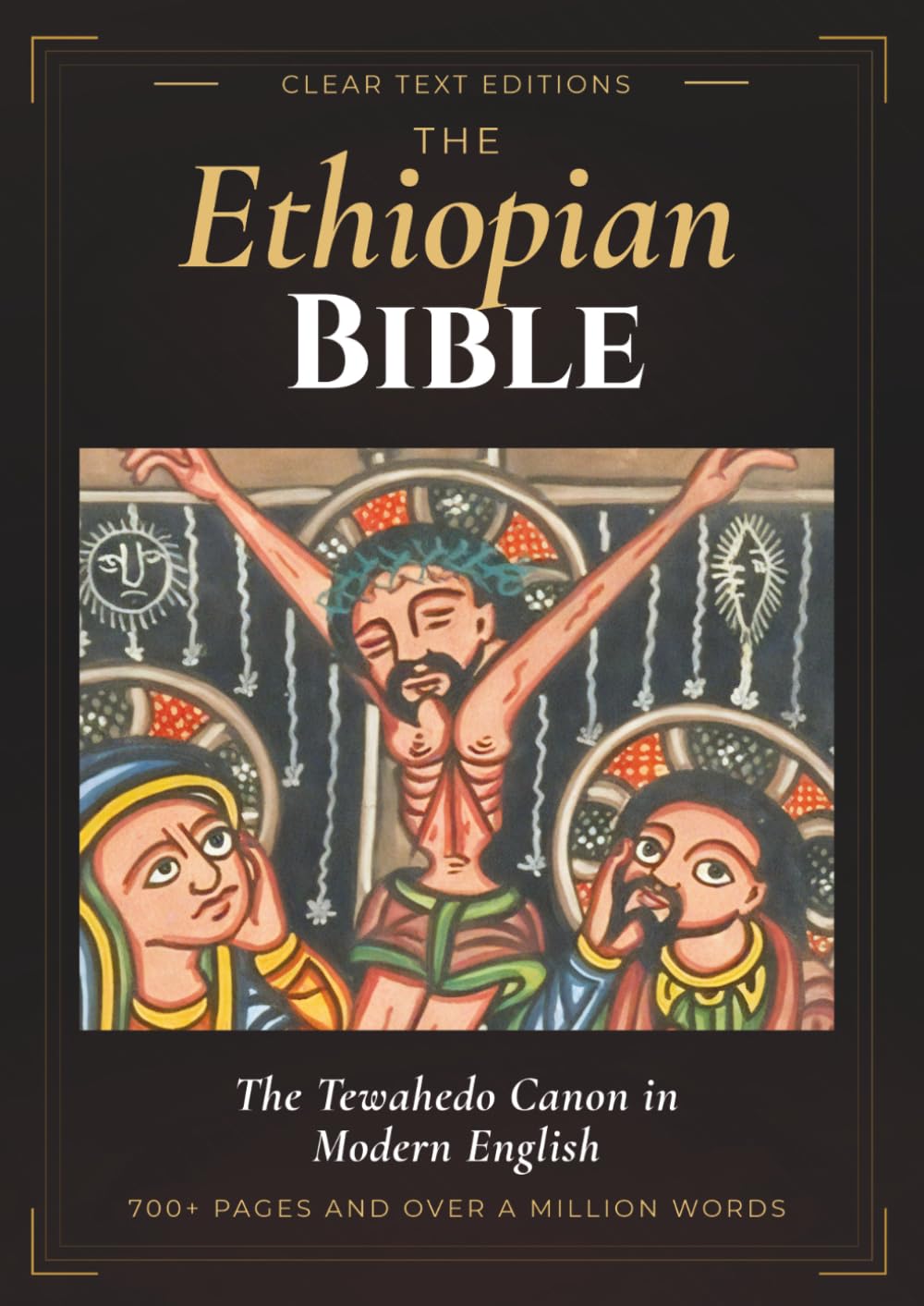
How many books are in the Ethiopian Bible?
The Ethiopian Orthodox Tewahedo Church recognizes 81 canonical books. This includes the 66 books of the Protestant Bible, the deuterocanonical books shared with Catholic and Eastern Orthodox traditions, and unique texts like 1 Enoch, Jubilees, the three books of Meqabyan, and the Church Order texts (Sinodos, Qalementos, Book of the Covenant, and Ethiopic Didascalia).
Why do some editions claim 88 books?
Read those listings closely and several of them tell you what the 88 is made of: the 66 books of the Protestant Bible plus 22 additional texts. 66 plus 22 is 88. Under that arithmetic the extra 22 are the familiar apocrypha along with Enoch, Jubilees, and Meqabyan, and the Books of Church Order are absent entirely. So an 88-book edition is not a larger count of the same canon. It is a different and smaller collection, arriving at a bigger number.
The count recognized by the Ethiopian Orthodox Tewahedo Church, and set out in the Feteha Negest, is 81: 46 in the Old Testament and 35 in the New. Before buying any edition, check its contents for Sirate Tsion, Te'ezaz, Gitzew, and Abtilis. That is the fastest way to tell what you are actually getting.
What makes the Ethiopian Bible different from other Bibles?
The Ethiopian Orthodox Tewahedo canon is the largest of any Christian tradition. It includes 1 Enoch (the Book of Enoch) and Jubilees as canonical Old Testament scripture, not apocrypha. It also includes the three books of Meqabyan, which are unique to the Ethiopian tradition and unrelated to the books of Maccabees. The New Testament includes Church Order texts that govern Ethiopian ecclesiastical practice.
Is the Book of Enoch in the Ethiopian Bible?
Yes. 1 Enoch is canonical scripture in the Ethiopian Orthodox Tewahedo Church. It has been part of the Ethiopian biblical canon for over 1,500 years. In most other Christian traditions, Enoch is considered pseudepigrapha or apocrypha, but in Ethiopia it holds full canonical authority alongside Genesis and Exodus.
What are the books of Meqabyan?
The three books of Meqabyan (also spelled Maccabees in some sources) are unique to the Ethiopian Orthodox canon. Despite the similar name, they are completely unrelated to 1-4 Maccabees found in Catholic and Orthodox traditions. The Meqabyan tell stories of Ethiopian and Judaic religious heroes and are written in Ge'ez, the liturgical language of the Ethiopian church.
Is there a complete Ethiopian Bible in English?
Many English editions sold as complete are missing the books that make the Ethiopian canon distinct, and the Books of Church Order in particular. Our edition assembles all 81 books, including all eight Books of Church Order and the Josippon, with every source named and every text rephrased into modern English prose. We believe it is the most complete English edition available, and we would rather you verified that than took our word for it. Our sources are published in full, so compare the contents against any other edition and see what is there.
One thing we will say plainly: the Josippon here is a reconstruction, not a translation from the Ge'ez, because no public domain Ge'ez to English translation exists. We explain exactly how it was built on the sources page and on the page where it appears.